Welcome to the Park of the Month newsletter for November 2026. This month we’re featuring a park whose biodiversity forever changed the way we view the natural world.
Galápagos National Park
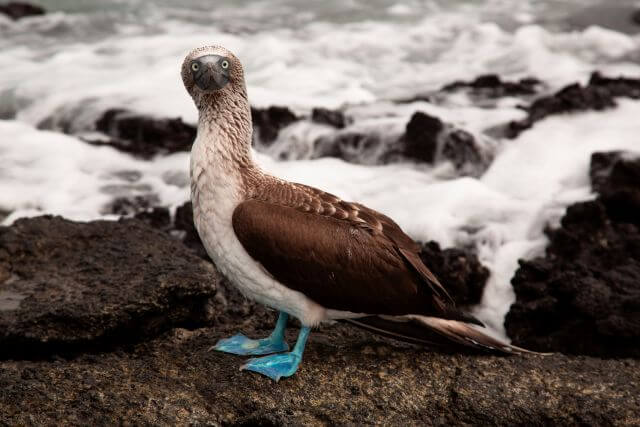
A blue-footed booby, a favorite species among visitors to Galápagos National Park. (Photo by Sofia on Unsplash)
Location
Galápagos Islands, Ecuador
Claim to fame
On September 15, 1835, the HMS Beagle arrived at the Galápagos Islands with the intent of surveying the area for the British Navy. A young geologist on board, Charles Darwin, made several geologic discoveries, but he also took note of the island’s wealth of plant and animal species. He brought several bird specimens home with him, and what he learned from studying them would form the basis of his groundbreaking work The Origin of Species.
Reason to visit
Galápagos National Park was established in 1959 to honor the one-hundred year anniversary of the publishing of The Origin of Species. The park covers 97% of the Galápagos Islands.
The park is visited by over 300,000 visitors a year, most of whom come to view the island’s abundance of diverse plant and animal species, some of which live nowhere else on Earth. The threats of tourism to the fragile ecosystem are real, and the park enforces strict rules on visitors, such as keeping a set distance from wildlife and always being with a licensed guide.
Wild Fact
The Galápagos Islands were named for the giant tortoise that inhabits the islands, as “Galápagos” means tortoise in Spanish. The Galápagos giant tortoise (Chelonoidis niger) is the largest living species of tortoise in the world and can grow to over 900 lbs (400 kgs). These tortoises can also live well over 100 years.
Darwin’s observations of the differences between Galápagos giant tortoise subspecies on different islands contributed to his theory of evolution.
Thanks for reading. Each month, we send out an image and description of a unique natural or cultural treasure like the one above. Learn new things, explore special places, and find your inspiration: sign up for the free newsletter today.