Welcome to the Park of the Month newsletter for July 2026. This month we’re featuring what is widely considered to be the most popular national park in all of Africa.
Kruger National Park
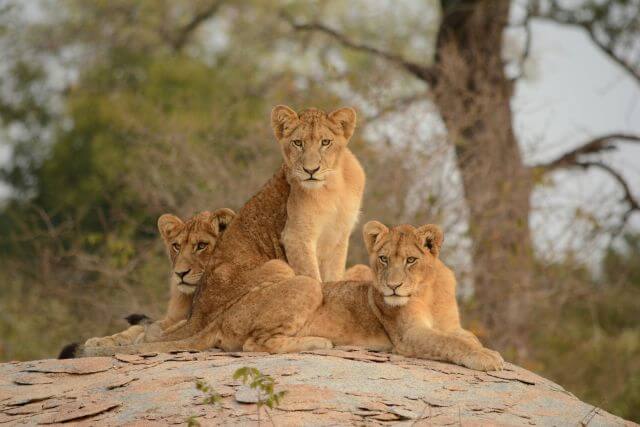
Lions are one of the Big Five mammals commonly seen on Kruger's safari tours. (Photo by Diego Morales on Unsplash)
Location
Northeastern South Africa
Claim to fame
While much of its land has been under government protection since 1898, Kruger National Park officially became South Africa’s first national park in 1926. Originally established by local landowners in an attempt to protect wild game, Kruger is famous as one of the best locations in all of Africa to spy the Big Five (elephant, rhinoceros, lion, leopard, and African buffalo).
Reason to visit
Receiving around 2 million visitors a year, Kruger National Park is one of the most popular wildlife safari destinations in Africa. With well-developed infrastructure like roads and lodges and being only a short plane or car ride from Johannesburg, the park is known for easy access to some of the most spectacular wildlife viewing on Earth.
As a biosphere reserve and a global leader in ecological conservation, the park protects numerous wildlife and plant species that draw in all these visitors, including 336 tree species, 49 types of fish, 34 amphibians, 114 reptiles, 507 birds, and 147 mammals.
Wild Fact
While famous for its wildlife, Kruger National Park is also home to a number of important cultural sites, many of which can be seen by visitors via tours, hikes, and museums. Humans have been interacting with the park’s ecosystem for over 40,000 years and have left behind prehistoric rock art as well as more recent evidence of settlements and trade and migration routes.
As was done in early US national parks and other parks worldwide, indigenous peoples were removed, sometimes violently, from Kruger upon the park’s creation. Kruger now works with locals to preserve their important historic and sacred sites and to keep alive their cultural traditions.
Thanks for reading. Each month, we send out an image and description of a unique natural or cultural treasure like the one above. Learn new things, explore special places, and find your inspiration: sign up for the free newsletter today.