Welcome to the Park of the Month newsletter for August 2025. This month we’re featuring one of the largest safe havens for Black troops and their families during the American Civil War.
Camp Nelson National Monument
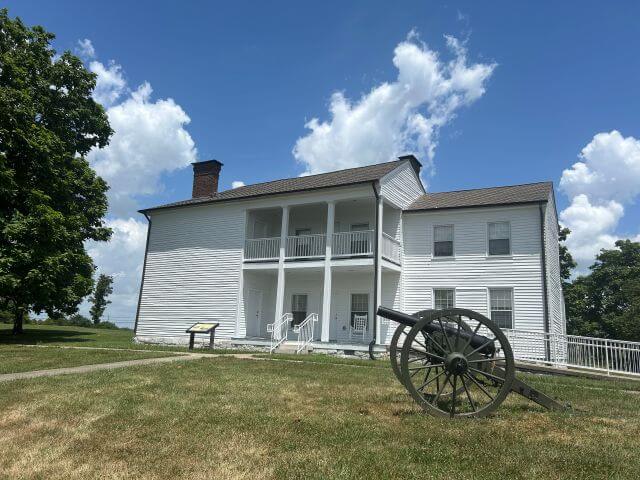
The Perry House, called the "White House," which housed officers overseeing Camp Nelson during the American Civil War. (Photo by Stephanie McCullough)
Location
Jessamine County, Kentucky, United States
Claim to fame
Initially built as a supply depot for US Army troops, Camp Nelson National Monument became one of the largest recruitment sites for free and enslaved Black soldiers during the American Civil War. Kentucky, though a slave state, did not secede from the United States during the war, and many of its enslaved people sought freedom by joining the war effort to end slavery.
Kentucky enlisted over 23,000 Black soldiers to join the US Army, the second most of any state. Camp Nelson was the largest recruitment site in Kentucky for these soldiers, with over 10,000 Black men enlisting or training there.
Reason to visit
Visitors to Camp Nelson can explore a museum that features Civil War era replica buildings and supplies as well as interpretive displays that relay the struggles and hopes of those who lived, worked, trained, and even died there. The park also boasts a short introductory film, an army barracks, a reconstructed fort, a memorial to those buried onsite, and five miles of walking trails. The nearby Camp Nelson National Cemetery was originally built to bury the camp’s soldiers and still inters US military veterans to this day.
Wild Fact
During the war, Camp Nelson was inundated with Black women and children escaping slavery, many of them the families of the camp’s soldiers. After public outcry over a particularly cruel incident in which over 400 of these refugees were evicted from the safety of the camp and forced into the frigidly cold countryside, resulting in over 100 deaths, the camp changed its policy and welcomed those escaping slavery.
Camp Nelson built a village for them called the Home for Colored Refugees, which included housing, a hospital, and a school run by Rev, John Gregg Fee, a vocal abolitionist who would later establish Berea College, the first interracial and coeducational college in the American South. After the war, some of these emancipated refugees and soldiers built their own community at the site, today named Hall, and some of their descendants still call the area home.
Want to learn more about Camp Nelson National Monument? Visit the park’s website.
Thanks for reading. Each month, we send out an image and description of a unique natural or cultural treasure like the one above. Learn new things, explore special places, and find your inspiration: sign up for the free newsletter today.