Don’t think about apples. Don’t do it. Don’t think about a juicy, ripe, crisp apple. Don’t think about apple cider, apple pie, or what it would be like to go apple picking with your sweetheart on a cool fall day.
Did you manage it? Did you not think about apples? Or have you thought about apples so much that now you want one? (I think I might go eat one after just writing this.)
If you have ever found it difficult to stop doing something after being told not to do it, you are not alone. You are in fact engaging in a natural human activity called reactance.
The reactance theory, first proposed by Jack W. Brehm in 1966, is an explanation of why we want to do the things we’re told not to do. Essentially we humans are resistant to limitations to our behavioral freedoms. It is a scientifically tested and true trait of human beings: when we feel our freedoms are being threatened, we resist.
Isn’t that remarkable? Aren’t you a little more proud to be a human being after learning that?
Not only does this phenomenon unite us in the seemingly eternal fight for our freedoms, but it also explains why we are seeing such resistance to the attempts by the current US Administration to erase history they don’t like.
What happens when you tell Americans they can’t know their own history? They get reactant.
For example, there is an historic photo that the US president has decided should be removed from all history exhibits overseen by his Administration. The image shows the severely scarred back of an enslaved man named Peter. Peter was whipped until his back was a writhing mass of scar tissue, and the current American president doesn’t want you to see him or learn about his suffering during his enslavement.
Which is why Peter’s photo is now everywhere. It is front and center in news articles about American censorship of history. This image, already famous, is now getting even more attention. When they tell us to look away, we look harder.
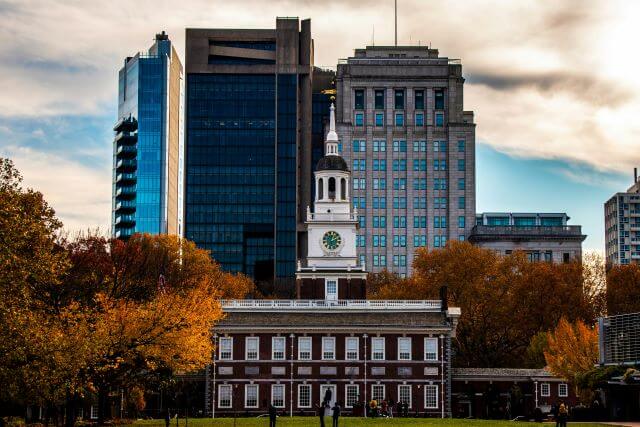
And the same is true for other historically accurate information about slavery displayed across the nation. Independence National Historical Park in Philadelphia is one of many sites overseen by the US National Park Service (NPS) that are now under threat of censorship concerning their historical exhibits about slavery.
From 1790 to 1800 Philadelphia was the temporary capital of the US while Washington DC federal buildings were under construction, and Independence NHP tells that story and protects many structures related to those early days of American democracy. George Washington worked and lived in Philadelphia as the nation’s first president, and he brought nine enslaved people with him.
There was a law at the time that would allow enslaved people to petition for their freedom after living six months in Pennsylvania. To circumvent this rule and maintain ownership of these enslaved people, Washington intentionally rotated them in and out of the state.
This story and other information about the people enslaved by America’s first president is the focus of an outdoor display in the park. The exhibit features walls simulating the house in which the enslaved once worked and lived.
The Trump Administration has recently flagged thirteen parts of the slavery exhibit to be removed in an attempt to whitewash American history. With no sense of the irony, they are trying to restrict freedom of thought in a park called Independence.
But what happens when you tell Americans they can’t know their own history? They get reactant.
The Trump Administration is fighting against one of the most universal aspects of human nature–our need to be free to think for ourselves.
A collection of 45 different local historical groups have written a letter to the Administration condemning the censoring of the exhibit. And Visit Philadelphia, the official tourism organization for the Philadelphia area, has announced plans to replicate any removed exhibits nearby on private property not overseen by the federal government.
It took over a decade of advocacy work to get the original Independence NHP slavery exhibit built, but it has taken only a few weeks of attempts at silencing it for the site and its historical significance to be written about by national media outlets like the New York Times, Washington Post, and NPR.
As Angela Val, the CEO of Visit Philadelphia told NPR in their recent article, “The moment you tell somebody they can’t do something or can’t read something, [they] immediately want to do it.”
The Trump Administration is determined to silence the accurate telling of American history, but they are fighting an uphill battle. They are fighting against one of the most universal aspects of human nature–our need to be free to think for ourselves. And we are already seeing evidence that this is not a war they will win.