I recently read a book about a tour through the US national parks, in which the author, a tourist who had never worked in federal land management, took a break from lauding America’s national parks to rant about how much she hated the US Forest Service.
She talked about how much the USFS logs and claimed the agency is a front for the logging industry. And then she went back to talking about all the things she knows about the US national parks, which she seems to have learned exclusively from national park junior ranger books. Many units of the USFS offer junior ranger programs too; perhaps she should do some of those.
If she did, she might learn a little more about the breadth and depth of the USFS. For example, she might discover that the USFS oversees 448 wilderness units that amount to 37 million acres. That’s nearly 20% of all USFS land and about a third of all designated wilderness in the US.
The USFS also runs the Aldo Leopold Wilderness Research Institute, the only federal research facility in the US dedicated to advancing our knowledge about how to steward wilderness.
The USFS is the largest forest research agency in the world.
She might also learn that around a third of all species listed as threatened or endangered under the Endangered Species Act live in USFS habitats.
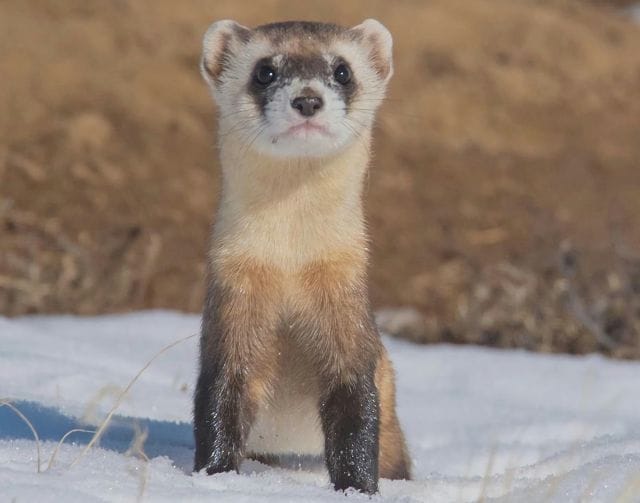
That’s about 450 federally protected species that are monitored and protected in national forests, including the Kirtland’s warbler in the Huron-Manistee National Forest of northern Michigan, the indigo snake (America’s largest native snake) in the Conecuh National Forest of Alabama, Taylor’s checkerspot butterfly in Olympic National Forest in Washington state, and the black-footed ferret (the only ferret species native to North America) which is being successfully reintroduced to its native habitat in Nebraska’s Buffalo Gap National Grassland (a part of the USFS).
If this woman had bothered to learn anything about the USFS, she might have discovered that, prior to the cuts of 2025 and 2026 conducted by the Trump Administration, the USFS maintained 77 research sites across the US, making it the largest forest research agency in the world.
These facilities employed over 400 scientists conducting research into wildland fire, climate adaptation, ecological health, sustainable practices for natural resource management, and much more that is vital to the survival of the world’s forests and other ecosystems.
But now, the Administration has recently announced its intent to shutter three-quarters of USFS research sites, including ones that conduct critical endangered species monitoring and research, sustainability and climate research, and wildland fire research.
With the dismantling of the USFS, we are looking at the potential annihilation of research programs that would safeguard not just our national forests themselves, but potentially all US federal lands and the health of forests worldwide.
When indigenous people were removed from national parks, much of their knowledge about the land was lost.
I think the author of this book was bringing up a prejudice that many environmentalists have toward the USFS. It is an argument as old as America’s national parks and national forests themselves: should we be using the resources on federal lands (logging the trees or hunting the deer) or should we be preserving them exactly as they are, like little nature museums?
The national forests were conceived of by the forest conservationists, like Gifford Pinchot, who wanted to use land for the public good and not just sell it off to private interests. The national parks were created by the purist preservationists, the folks like John Muir, who believed that humans could only do terrible things to nature, and therefore a space could only be “natural” if it was without humans.
In line with this view, many national parks evicted indigenous peoples from their ancestral homes. Many of these indigenous people had thousands of years of knowledge about how to use local plants and animals and live in those places sustainably. They used controlled burns, knew how much of any species to take without impacting the population, and understood seasonal and other changes. When indigenous people were removed from national parks, much of this knowledge was lost.
And some of this knowledge can not be regained in national parks, because the national park plants and animals are protected in ways that make the type of experimentation necessary for rediscovering all that was lost impossible. If we are to regain our knowledge of how to manage and use America’s natural resources sustainably, researchers like those at the USFS–who have access to experimental forests and grasslands–will need to do much of the work.
The Trump Administration has announced plans to dismantle the USFS.
Now, I want to be clear: I am a massive national park enthusiast and spent much of my career while a US national park ranger advocating for their protection. I do not think we should be hunting or logging or doing any other kind of resource extraction on National Park Service land.
But I also know that those lands were once masterfully managed by indigenous peoples who understood how to live on the land without destroying it. If we are to protect national parks for the future, we will have to learn how to do the same. And again, the USFS and other land management agencies that can conduct experimentation and research on some of their lands are where much of that knowledge will come from.
Now that the Trump Administration has announced plans to dismantle the USFS, our national parks are also at risk. Without vital USFS research, we will not know how to protect our national parks from fire, climate change, and all the other present and future threats that USFS scientists investigate.
Without the USFS, our national parks will lose a partner that does what national parks can’t do (like using plots of land for experimentation), and provides them support (like large teams of wildland firefighters) that they don’t otherwise have.
Does the USFS do some stuff that I, an environmentalist and a former national park ranger, dislike? Absolutely. In the 120 years of the USFS, they have at times interpreted their motto of “Caring for the Land and Serving people” to mean carrying out excessive logging, resource extraction, and other destructive practices that have benefited only a few people and done much harm to the lands they are sworn to protect.
The land ethic is the idea that we humans don’t just live on land but are a part of it.
The USFS is, like every other federal agency, a reflection of the US government in which it sits, and in recent decades our federal government has grown increasingly less democratic and dramatically more focused on enriching private entities.
And now, under this Administration, our US forests and other federal lands are being opened up for more resource extraction than ever before.
But the USFS has also done some good things. Aldo Leopold, a writer, farmer, hunter, naturalist, father of US designated wilderness areas, and career Forest Service employee, gifted us the concept of the land ethic, which is the idea that we humans don’t just live on and own land but are sustained by land and therefore a part of it. He wrote that we have to figure out how to utilize the Earth’s resources in a way that sustains both them and us.
His work provided the origins of the modern sustainability movement, although he was only saying things that humans from indigenous cultures around the world have long known. Robin Wall Kimmerer, a Potawatomi botanist and author, writes that being indigenous to a place means creating a reciprocal, responsible relationship with the land on which we live, which is exactly what the motto of the USFS claims that the agency is aiming for.
Has the USFS always gotten it right? No. But is the concept of having a land management agency that is dedicated to figuring out how to make us as Americans actually more indigenous to the land we are caretaking a good idea? Yes, I think it is.
A junior forest ranger program might not have taught the author of the book I read all of that, but she might have gleaned something from it that would have caused her to care that the entire agency is about to be dismantled. Had she looked into the USFS, she might have discovered that it, like the rest of America, needs some fixing but is ultimately worth saving.
Inspired to support America’s public lands? Here are five ways you can help.